


Marc Zermati: Sky Pilot. By Nina Antonia
Marc Zermati was a significant figure in the gestation of punk 50 years ago. He started Skydog Records in 1973 and in 1976 organised 'The First European Punk Festival' in the south of France, a month before McLaren's 100 Club event. That same year he released Iggy & the Stooges 'Metallic KO', now heralded by The Guardian as one of the 30 best live albums ever. And he was at the birth of Stiff Records with Jake Riviera & Nick Lowe, helping with distribution and releasing The Damned 'New Rose' in France. In 1993 Nina Antonia asked him about his life; unpublished until now:-
From a fabulous, streetwise radical youth to today's refined guerilla: More than a hint of riot still remains in Marc Zermati. He is sharp and cool, and speaks unassumingly of his passage as underground luminary in a pleasurably rough purr of an accent. We are sitting in a small office room, within his Parisienne apartment, encircled by memorabilia, records, CDs and the current Skydog International catalogue. It's a packed synopsis of a life in rock and roll. (continued...)
He shows me an interview with Bill Wyman that he has just had printed in a leading French magazine, and although writing has not been one of his usual formats, he has begun a book and already there is publishing interest ...
'My book will cover the period from 1971 to 1977; it's a period that was very rich. I will write about my relationships with all the people that I met, Johnny (Thunders) Malcolm (McLaren) Sid (Vicious) Chrissie (Hynde); my work with The Clash - I realise it will take a lot of time.'
He has recently been interviewed by French TV, on his recollections of meeting Jim Morrison in Paris and is just as much involved in promoting bands as he ever was – from Johnny Thunders final tour of France, to 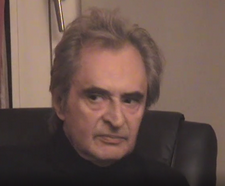 taking The Cramps to Japan, last year – he is presently immersed, amongst other projects, in organising Far East dates for Dave Stewart's Spiritual Cowboys and Don Lett's Screaming Targets.
NINA: Although most people are aware of Skydog's seminal importance in promoting the original punk scene, and its influence on many of the early independent labels, such as Stiff and Chiswick, not a great deal is known about your personal background.
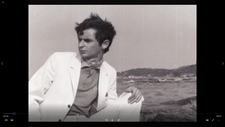 MARC: I'm from North Africa; I was born in Algeria a long time ago! As you may know, there was a civil war in Algeria, so in '61, all the French people had to leave. We returned to France. In '62, when I was seventeen, I came to England to study the language, in Bournemouth. I met a lot of people; I became friends with Eric Burdon (The Animals) and some of the guys from Manfred Mann. I became a mod and I got to know an American guy called Sandy, who was the first mod in England; there was even an article about him in a Bournemouth paper. Not that long ago I was talking to Nick Lowe and he told me...'We were jealous of you French kids because you were coming to England, all dressed up and the English girls were crazy about you...'. I used to go to The Flamingo club on Wardour street, of course there was The Marquee but The Flamingo was more popular with the mods. When I met Bill Wyman, I found out that we knew some of the same people from that scene. I was supposed to be a student, plus I was doing all kinds of jobs... selling ice cream on the beach, trying to make a little money. I was staying with an English family but they freaked out because I never used to come back until two or three in the morning so I moved out into a bed and breakfast.
NINA: How did you manage to get your influences? I would have thought that it would have been extremely difficult to be able to get in touch with anything during a civil war, yet by the time you got to England, you were well versed in rock and roll.
MARC: I was into rock and roll right from the beginning, I also liked jazz. Because of the war, there weren't too many gigs but I did get to see Dizzy Gillespie. There was an American army base that had a big store for the soldiers, so I was able to buy records and see rock and roll movies. You have to understand that the civil war lasted for seven years, there was a ten o'clock curfew – I needed to have something to enjoy – that was music. I was crazy about Little Richard and Jerry Lee Lewis. Eric Burdon could not believe that this kid from North Africa could talk about the blues. I saw Eric again, 2 years ago. He recognised me and now we keep in touch.
NINA: When did you move to London and what was the scene like, at that time?
MARC: I saw The Stones in Bournemouth in '64, after that I went to London. I knew a dealer who was selling purple hearts and I used to go out dancing all night. By 1965 I was starting to take acid and later on, I got really crazy about psychedelic music. I went to Middle Earth in Covent Garden: I saw Pink Floyd with Syd Barrett, at their beginning, I saw Tomorrow, Dantalian's Chariot, Arthur Brown and Jimi Hendrix...Hendrix was so great. I started working with Marc Boile who did the light shows at Middle Earth and then I went to live in Ibiza for a year.
NINA: I would guess that you have never exactly been a strong supporter of any recognised establishment, I believe you had some involvement in the Paris uprisings of the late '60's.
MARC: When I came back to Paris, it was May '68. I arrived in time for the revolution, I enjoyed it, it was fun. I was against the establishment and of course, became a part of the underground movement. We started the first underground paper in France Para Pluie’ (Umbrella); I thought that music was the only revolutionary message for the kids and formed a party called 'The Electric Panthers' to fight for good music – pushing bands like The Stooges and The MC5. In '69 I was set up and put in jail for four months for a drug story that had nothing to do with me. They did not like me so much because of my involvement with the underground.
NINA: You started up a small record shop at the beginning of the '70's, which in turn led to a small distribution company, how did this get underway?
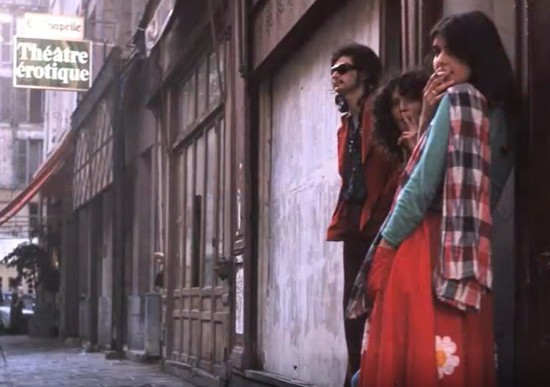
MARC: In '71, I decided to start a record shop. I began with a stall in a market in Paris called 'The Open Market' it was a bit like a small Kensington Market. I was given the smallest stand, I didn't have a lot of money but after a year and a half the market became famous because of me and I took the whole place over. I was selling a lot of bootlegs, some underground press, posters from San Francisco and comics. Right from the start, the best-selling records were The Velvet Underground, MC5, The Stooges, Flaming Groovier and later of course, The New York Dolls. Those were the things that I liked and wanted to push. People would come by the shop and ask for Genesis or second-generation Pink Floyd albums; I never sold them what they asked for, they would leave with what I decided to sell them. The market became quite a little scene, kids would drop over, listen to music, maybe smoke a joint.
By '73 I was out on the street...the owner of the property had died and his son asked me if I wanted to buy it for more money than I had. After six months I found another shop in the same district. It was the second Open Market and it became very well known. In the meantime, I started a distribution company 'Bizarre' with a friend of mine, Larry Debay. We were distributing American stuff, underground music and English punk. Sid Vicious did not like Larry, I remember he said 'Your partner looks like a hippy'.
NINA: When did you get Skydog going?
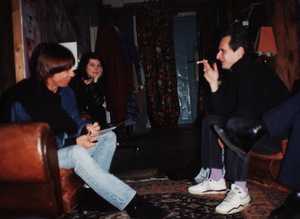 MARC: I started Skydog in 1973. The record company was in Amsterdam; the shop was in Paris. We imported the records from America and England to Amsterdam, to avoid customs problems and by selling them in Paris we were able to keep the prices lower. The first thing we ever did on Skydog was an album called 'Sky High' this was a jam session with Jimi Hendrix, Jim Morrison and Johnny Winter. I'd got my hands on the tapes through a guy in Belgium, when I got them, I immediately declared them to the French copyright society and I declare: them in Holland, also. It was quite a big success; it sold 25,000 copies. We were the first independent rock and roll label. We did a lot of things with the pub rock scene and I started promoting bands, as well. I did Dr Feelgood, Eddie and The Hot Rods, Flamin’ Groovies, The Clash, Ducks Deluxe, Tyla Gang. I had the shop, the promoting and the record label. I met Jake Riviera, we became friends and he saw my label was a good thing. We had a meeting in London and then Jake and Nick Lowe started Stiff.
NINA: I read in a Pretenders' biography, that you were responsible for setting up Chrissie Hynde with a band, very early on in her career.
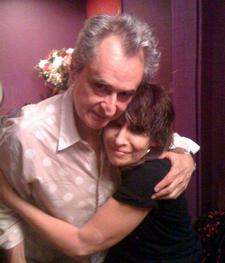 MARC: All the American musicians, when they came to Paris, they came to the shop. This was how I got to know Chrissie. She had been writing for the New Musical Express and had been going out with Nick Kent but there had been problems so she went back home to Akron, Ohio for a while, then decided to come back to France. I told her that she had to start a band, I set her up with one that already existed, unfortunately the musicians were not that good but they started to rehearse in the cellar of the shop. In November '73, I was promoting The Flamin’ Groovies at The Olympia and I needed a support band so I asked Chrissie. They went on stage as 'Chrissie and The Frenchies' they also supported Dr Feelgood several times. Anyway, she was not happy with the band, she deserved better. She went back to England, started working in Malcolm's shop 'Sex' and started to do alright after a while. I met Sid (Vicious) through her, then Mick Jones from The Clash, I took him to see The Flaming Groovies, at the Dingwalls after-show.
NINA: Could you pick out a band that you especially enjoyed, during that period?
MARC: I pushed The New York Dolls a lot – I liked them very much – they were the band that gave French kids exactly what they expected from rock and roll. The Dolls were huge here, the first time they came to Paris, they played three concerts in three different venues in the same week. This was when the riot happened in The Bataclan; the show was fantastic but some of the kids were spitting at Johnny (Thunders) and he did not like it at all, so he took his guitar and hit out into the audience with it. That was when the riot started, I was at the front of the stage and a bouncer pulled me out. The Clash, they were my pals and it was more than a pleasure to work with them.
NINA: Weren't you the force behind all the French punk festivals?
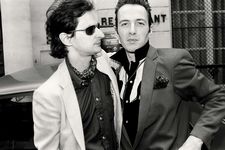 MARC: I put together France’s first punk festival in '76. The only real punk band were The Damned, the other acts included Nick Lowe and Dave Edmunds. The Damned were completely unknown in England at the time. Jake Riviera was there and later we co-produced The Damned's first single New Rose/Help. In England it came out through Stiff, in France it was released through Skydog. I became more concerned with French punk bands and I began to record and produce them. The following year, I did the second festival, it was a two-day event and about 6,000 people went to it. We had the first Police line up with Henry Padovani, Generation X played, The Damned were there, The Clash, Cherry Vanilla. Malcolm Mclaren didn’t want the Sex Pistols to play and The Jam pulled out because they weren't happy with the billing, they were afraid to come on after Little Bob Story because he was so successful here.
NINA: I understand that Skydog had run into some problems by the close of the 70's
MARC: I had closed the shop; I was very depressed...the new wave was starting but I didn't like it. Skydog was doing okay but I'd spent a lot of money on drugs. I went back to jail again, for real, this time. I was in for four months and I was very sick because I was an addict. There was a benefit held for me in London, Chrissie played, Rockpile, Ducks Deluxe, The Damned played, it was a success but the guy who supposed to bring the money over to pay my lawyer, disappeared. When I came out of prison Skydog was ruined and I'd lost my house. There had been another benefit in Paris.... again, the money went missing.
NINA: What is the story behind 'Underdog' because that seemed to be doing really well for a while, then it just folded.
MARC: In 1981, I started another label 'Underdog'. It was really successful. The situation was a bit different; we couldn’t do as much punk because the scene was gone. I was able to set Underdog up with the support of another label and some French artists helped me, as well. We signed The Sparks with a licensing deal, three months after we started the company, we had two gold records; a Sparks album called Terminal Jive and a record by a singer who I thought was really stupid! We were making a lot of money and I was doing everything that I wanted to do... we recorded the Flamin’ Groovies and it all seemed to be going well. I had a partner and whenever I needed anything he would say okay. After two years, my secretary told me to be careful of my partner. I found out that he was buying houses, Cadillacs...I hadn't looked at the money in the bank. I ended up on trial with him, I was suing him and he put Underdog into liquidation. I never got a thing from it. Everything we had done was successful, we did a record with Wilko Johnson, it cost us £800 to produce, on an eight track. It sold many copies. We did The London Cowboys ‘Animal Pleasure’ and 'Tall In The Saddle' albums. We released a Mitch Ryder album and The Sparks second record 'Bomp That Sucker'. We closed down in about 1983, it was so disappointing.
NINA: I remember during the mid-eighties, that there was some talk of Johnny Thunders maybe doing a deal with Skydog, what happened?
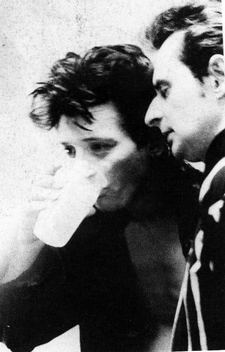 MARC: At the end of '84, I decided to start Skydog again, but just before I was able to get started, I had freaked out because The Cramps and Johnny Thunders had approached me to be on the label and I did not have enough money to give them advances... I had no organisation, no secretary, nothing, so I lost a lot of stuff. I lost Johnny and when I saw what New Rose had done for him and The Cramps, I felt I could have done better. I even told Johnny to go to New Rose because they had the money. When I was a management position or representing musicians, I was always able to get more money for the people I was looking after but when it was for me, I found it more difficult, psychologically. Nowadays I'm a lot stronger. Anyway, a friend of mine who ran a record/distribution label called Celluloid approached me and I got Skydog going again. I produced a lot of things, The Senders from New York. The Flamin’ Groovies, again. The Prisoners. We put out The Heroes (ex-Heartbreakers Billy Rath and Walter Lure) single and some compilation albums.
NINA: These days, Skydog seems to be both flourishing and stable, you're releasing a lot of great things. I've just seen Metallic K.0 on CD for the first time.
MARC: The label is now known as Skydog International. We've released Metallic K.O again, it's doing well and I have two more Iggy records to come out. We also released The Purple Knif Show... in 184, a Los Angeles radio station played some of Lux Interior's favourite singles, eventually it became a bootleg. I called up Lux and suggested we put it out on record. We set up in his flat, he made all these effects on the microphones, it's gorgeous.
Today Skydog International only deals in CDs, occasionally for export we still do orders of vinyl. I also take care of the Acid Jazz catalogue for France and will hopefully start a dance music label and a video label with a lot of US cult movies; I would also like to release an MC5 video and some Johnny Thunders footage. I like to keep myself busy, it’s very important for me.
END
